5K- Product Quality - Competitive Pricing - Customer Service - Efficient Supply - Expertise and Trust
Moulding
Trim and mouldings offer a simple yet highly effective way to refresh and elevate any interior space. Whether you are updating old, damaged mouldings or introducing new decorative features, these architectural details can dramatically change the look and atmosphere of a room without a large investment. From subtle accents to bold design statements, trim and mouldings bring character, structure, and a polished finish to your walls, ceilings, doors, and windows.
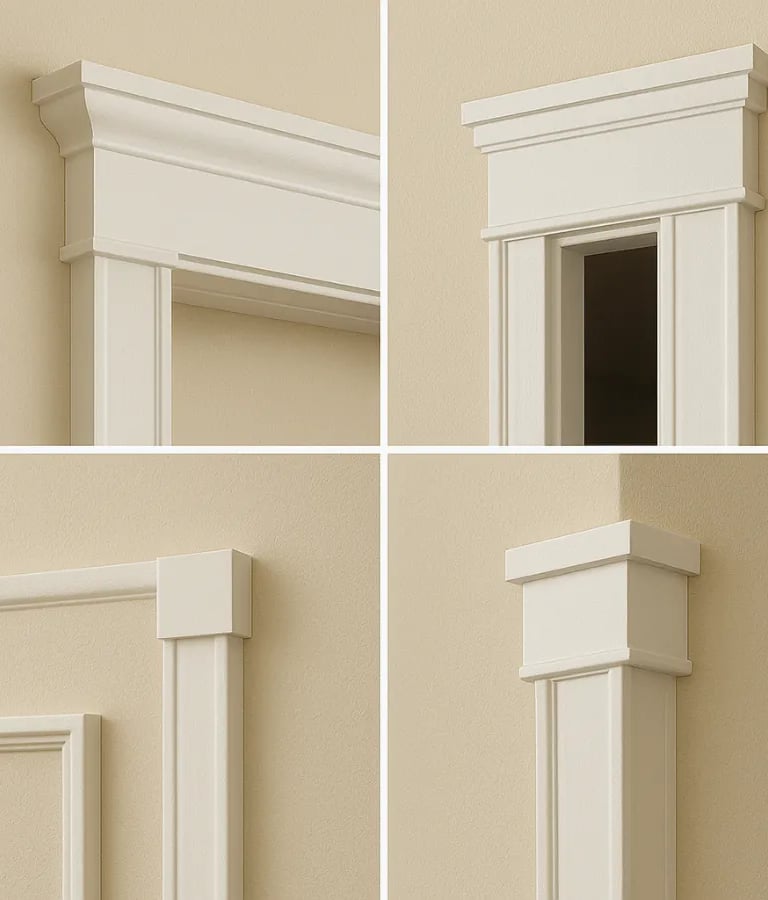
Some of the most widely used moulding profiles include baseboards, crown mouldings, and door and window casings with headers. Baseboards are installed where the wall meets the floor, helping to hide expansion gaps and uneven edges while creating a clean, finished transition. Crown mouldings sit at the junction of the wall and ceiling and are often used to add elegance and depth. They can visually enhance a room by making ceilings appear taller, spaces feel larger, and paint colors look more refined. Casings and headers frame doors and windows, neatly covering the gaps between the wall surface and the frame while adding architectural interest.
In addition to these functional profiles, there are decorative trim elements that serve a more aesthetic purpose. Chair rails, wall trim, and ceiling accents are becoming increasingly popular in modern interior design. Wainscoting is a classic example of this trend. Historically, it was used to protect walls from damage, but today it is primarily chosen for its timeless style and ability to add texture, dimension, and sophistication to living spaces.
One of the greatest advantages of trim and mouldings is their versatility. Profiles can be customized, mixed, and layered together to create unique build-ups and larger architectural features. This flexibility allows homeowners and designers to achieve anything from clean, minimal looks to rich, detailed designs, making trim and mouldings a powerful tool in transforming interiors.

5K Building Supplies
567 St. Mary's Road, Winnipeg MB R2M3L6
Contact
Newsletter
5kbuildingsupplies@gmail.com
204-997-0731
© 2025 to 2026. All rights reserved.